
Intuitive eating can sound deceptively simple: stop dieting, listen to your body, and eat according to hunger, fullness, and satisfaction.
But for many people, it doesn’t feel simple at all.
When you’ve spent years relying on food rules, external guidance, or control, turning inward can feel confusing—even threatening. You may worry that without rules, you’ll lose control. You may second-guess your hunger, mistrust satisfaction, or feel pulled back toward the familiar structure of dieting.
That’s because intuitive eating asks for more than a change in how you eat. It asks for a change in how you relate to yourself.
And that is where the Enneagram can be especially useful.

The Paradigm Shift of Intuitive Eating
Intuitive eating isn’t chaos. It isn’t a free-for-all. And it isn’t permission to abandon yourself.
It also isn’t “just listen to your body” with no guidance or context.
Intuitive eating allows you to eat what you want, but it relies on an internal system that is able to communicate clearly. After years of restriction, fear, or ignoring your body, hunger and fullness can feel confusing. Relearning those signals takes time.
Part of what makes intuitive eating so difficult at first is that we try to use the map from one paradigm to navigate another.
Intuitive eating isn’t a different version of dieting or “eating healthy.” It’s a completely different worldview. It asks you to step out of a culture organized around food rules, “good” and “bad” choices, monitoring, vigilance, and body control.
You’re shifting:
from control to trust
from external rules and guidelines to internal signals and guidance
from managing your body to listening to it
That can feel disorienting. Sometimes even frightening. Beliefs such as “I still need to be careful,” “I still need to manage my hunger,” or “I still need to control my weight” can quietly keep one foot planted in the old paradigm.
And making that shift requires more than understanding the principles of intuitive eating. It requires understanding the person who is trying to make it.
That’s where the Enneagram can help.

Where the Enneagram Helps
The Enneagram is a personality system that helps identify the deeper motivations and strategies that shape how we move through the world.
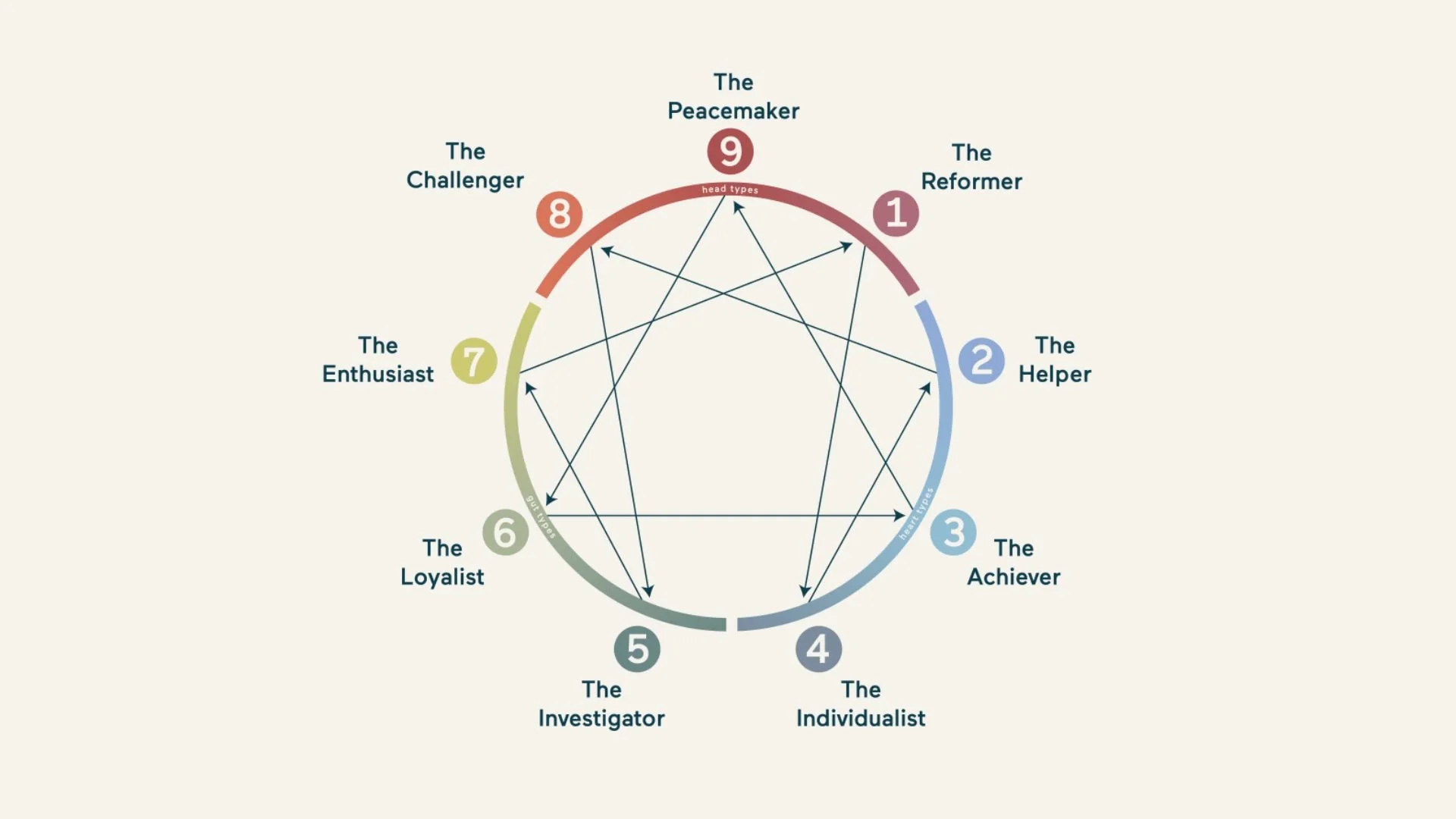
That matters here because two people can struggle with intuitive eating for very different reasons. One may be trying to do it perfectly. Another may distrust their own judgment. Another may resist anything that feels like control. Another may lose track of their own needs while focusing on everyone else.
The behavior may look similar on the surface, but what is driving it can be very different.
The Enneagram becomes a powerful companion on this journey—not because it changes how you eat, but because it helps you understand yourself in a deeper, more compassionate way.
Instead of asking, “What’s wrong with me?” you can begin asking, “What makes sense about this pattern?”
That shift matters.
Shame tends to narrow our attention and keep us stuck in the very patterns we are trying to change. Curiosity creates more room. It lets us notice what is happening without immediately judging it, fighting it, or turning it into evidence that we have failed.
The Enneagram can help make that curiosity more specific. It gives us a way to notice the strategies we rely on automatically—especially under stress—and to understand what those strategies may be trying to accomplish.
The Enneagram brings awareness, and awareness naturally invites curiosity.
Curiosity softens shame.
And softened shame makes intuitive eating far more possible.
If you’re new to the Enneagram or aren’t sure of your type, start with The Enneagram: What’s My Type?.
The enneagram and intuitive eating complement each other beautifully:
The Enneagram gives you psychological insight—clarity about why you struggle in certain ways.
Intuitive eating gives you embodied guidance—how to listen, respond, and rebuild trust with your body.
Together, they create an internal environment where change feels safer, kinder, and far more sustainable.

A Glimpse of What This Integration Can Offer
When people explore the Enneagram alongside intuitive eating, a change occurs in the inner climate they bring to the work.
The Enneagram helps people see that the patterns they’ve struggled with for years—perfectionism, avoidance, urgency, people-pleasing, control, emotional intensity—are not personal failures. They’re predictable strategies that one-ninth of the population also uses. This recognition softens the shame and self-judgment that make it so hard to listen inwardly.
Instead of treating resistance, mistrust, rigidity, avoidance, or self-criticism as evidence that you are doing intuitive eating badly, you can begin to see them as patterns with a history and a purpose.
The Enneagram helps you understand yourself and why you do the things you do, and why they feel so hard to shift.
And that understanding creates the emotional room needed to engage with hunger, fullness, satisfaction, and body trust with more honesty and less fear.
Intuitive eating provides the embodied skills. The Enneagram helps clear the mental and emotional noise so those skills can take root.
Together, they create a kinder, clearer internal space—one where listening inward becomes possible, even natural, because you finally understand the person who’s doing the listening.

Keep Exploring
If you want to understand more about how your Enneagram type may show up around food, read How the Enneagram Can Help You Understand Your Eating Patterns.
If you’re newer to the Enneagram or still figuring out your type, start with The Enneagram: What’s My Type?.
For a real-life example of how Enneagram patterns can show up around eating, read Holiday Eating Through the Enneagram Lens.
And if you want to keep exploring intuitive eating, continue with the intuitive eating articles on Eating Wisdom.









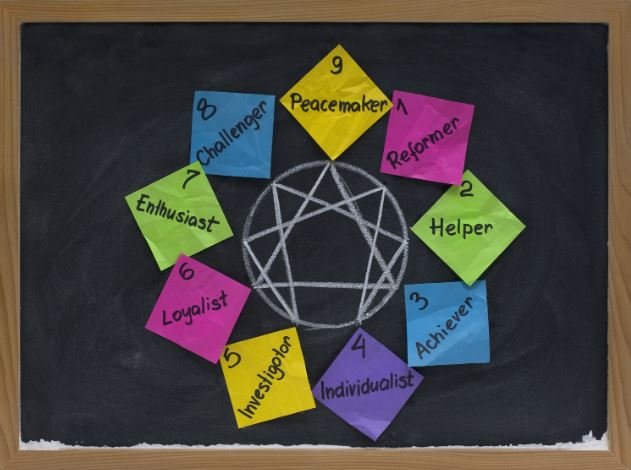


Learn how each Enneagram type experiences holiday triggers, stress, and eating patterns. Looks at navigating food, family, and seasonal pressures without diet culture.