
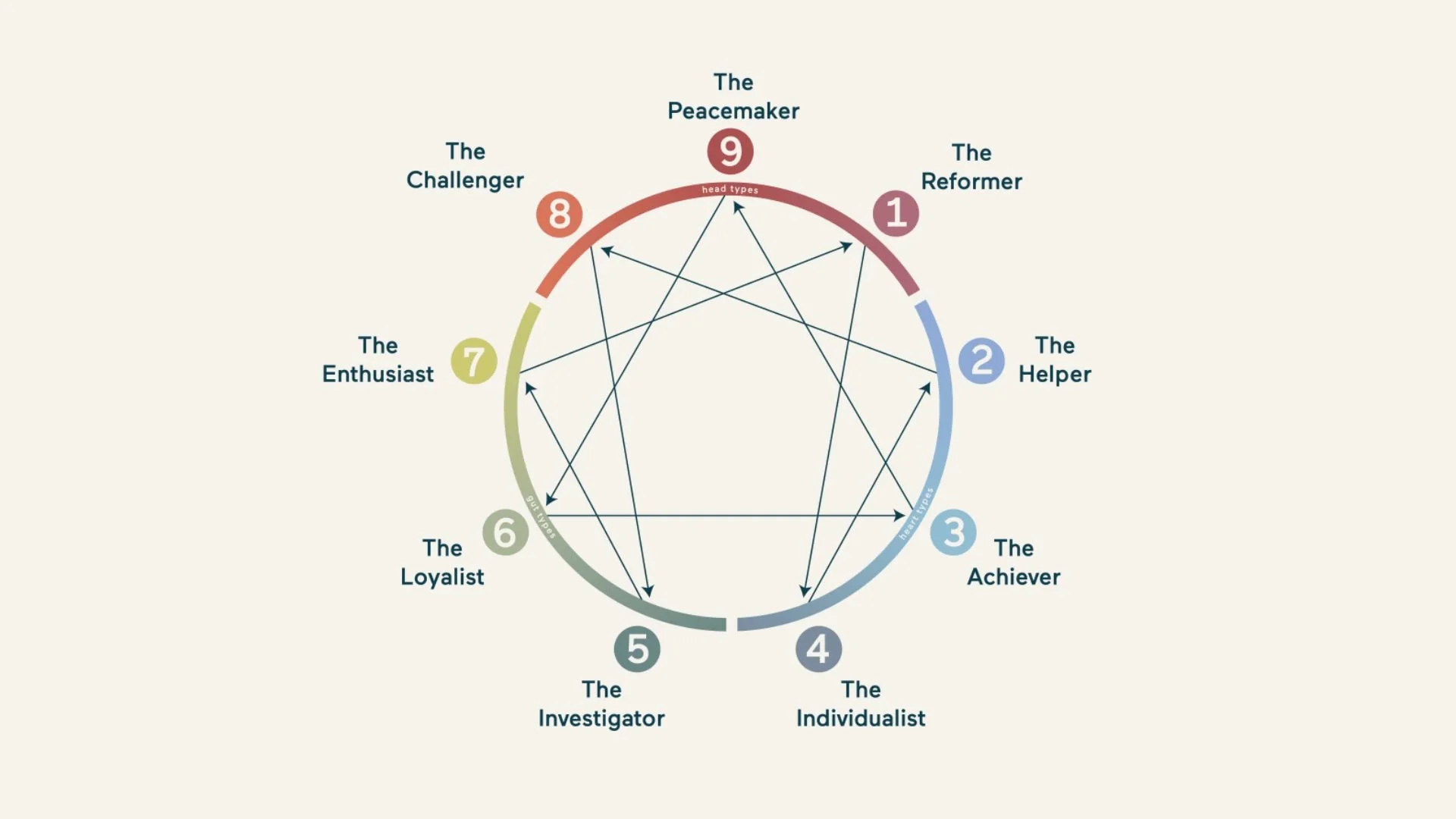
According to the Enneagram, we each learned to cope with life by developing one of nine strategies—patterns so familiar that they operate mostly outside our awareness, even for people who have done years of personal work. The Enneagram helps illuminate this hidden terrain with remarkable clarity.
Eating has its own version of this hidden terrain.
We come into the world with a remarkably direct relationship to food. Hunger rises, we eat, and when things are working well, satisfaction helps bring eating to a close.
But over time, many other influences can begin to interfere with that process—family rules, dieting, stress, culture, trauma, and the strategies we develop for coping with life.
We are born with a remarkably straightforward relationship to food: hunger rises, we eat, we feel satisfied, we stop. No moral meaning. No second-guessing. Just attunement.
But over time, cultural messages begin to erode that natural ease.
The Clean Plate Club
“Good” and “bad” food lists
Eating to shrink the body rather than nourish it
Slowly, eating becomes less about internal signals and more about rules, roles, and expectations. What once felt simple now feels confusing. You find yourself eating in ways you didn’t intend—overeating, restricting, rebounding, promising yourself a reset on Monday—yet the pattern persists.
You may know exactly what you want to do around food, and still slip into automatic behaviors that feel frustrating or out of sync with your intentions.
The Enneagram offers a way to understand those patterns with more clarity and less blame. Not because it tells you what to eat. Not because it hands you another set of rules.
But because it helps you see why certain behaviors around food feel so deeply ingrained.
Each Enneagram type has its own internal logic—its own way of seeking safety, belonging, connection, or control. And those deeper motivations often show up in eating long before we notice them anywhere else.
This blog introduces how each Enneagram type might relate to food and eating. Not as a diagnosis, not as a box, but as a way to notice patterns that could be quietly shaping your relationship with hunger, fullness, permission, and comfort.
How Each Enneagram Type May Show Up Around Food
Type One (The Reformer)
Ones often bring standards, rules, and a strong sense of how things “should” be done to eating. Food can become another place to try to get things right, which may show up as rigidity, guilt, or frustration when eating doesn’t go according to plan.
Type Two (The Helper)
Twos naturally orient toward other people’s needs and can lose track of their own. Around food, this may mean postponing hunger, eating while caring for others, or turning to food for comfort when their own needs have gone unattended.
Type Three (The Achiever)
Threes are often focused on achievement, effectiveness, and keeping things moving. Eating may become something to manage efficiently, control, or fit around productivity rather than something to pause for and experience.
Type Four (The Individualist)
Fours tend to experience life with emotional depth and intensity. Food can become connected with mood, longing, comfort, identity, or the wish to create a particular emotional experience.
Type Five (The Investigator)
Fives often move toward thinking, observing, and conserving energy. They may become disconnected from physical cues, delay eating while absorbed in something else, or approach food more analytically than experientially.
Type Six (The Loyalist)
Sixes tend to anticipate problems and look for security and certainty. Around food, this can show up as second-guessing choices, relying heavily on rules or outside guidance, or worrying about whether they are eating the “right” thing.
Type Seven (The Enthusiast)
Sevens are drawn toward possibility, stimulation, and avoiding limitation. Food may become another source of pleasure and variety, and slowing down enough to notice hunger, satisfaction, or discomfort can sometimes feel restrictive.
Type Eight (The Challenger)
Eights often value strength, autonomy, and not being controlled. Food rules or outside advice may provoke resistance, while eating itself can become a place to assert independence or avoid feeling vulnerable.
Type Nine (The Peacemaker)
Nines naturally tune into the environment and other people, sometimes at the expense of their own priorities. Around food, they may go along with what others want, lose touch with hunger and preference, or use eating as a soothing way to settle in and disengage.
A Note About Enneagram Nuance
These descriptions are only starting points. The Enneagram is much more nuanced than nine simple personality categories, and people of the same type can look quite different from one another.
Life experience, stress, self-awareness, and other aspects of the Enneagram all influence how a type shows up. Sometimes two people of the same type may even behave in opposite ways on the surface.
That’s why the most useful question is not simply, “Does my type do this?” but “What might be driving this pattern for me?”
The value of the Enneagram is in helping you understand the motivation or strategy underneath the behavior—not in giving you another set of rules about how someone of your type is supposed to eat..
Why This Matters
When you start to see your eating patterns through the lens of your personality—not discipline, not willpower, not “good or bad choices”—something softens. Shame loosens its grip. The story changes from “What’s wrong with me?” to “Oh… this is the strategy I learned to feel okay.”
You may notice that you use food to meet emotional needs, quiet anxiety, manage approval, avoid conflict, create pleasure, or assert independence. You may notice that hunger feels muted or inconvenient, or that food becomes symbolic of identity, safety, comfort, or performance.
These patterns aren’t personal flaws—they’re learned strategies that once made sense, even if they no longer serve you well.
The Enneagram doesn’t fix your eating. It simply helps you understand yourself more clearly—so you can make choices that are grounded, compassionate, and aligned with what you actually need.

Keep Exploring
If you’re not sure of your Enneagram type, start with The Enneagram: What’s My Type?.
If you’re interested in going further with how your type may affect intuitive eating, read Nourish Your Type: What Happens When the Enneagram Meets Intuitive Eating.



Learn how each Enneagram type experiences holiday triggers, stress, and eating patterns. Looks at navigating food, family, and seasonal pressures without diet culture.