
When food takes up far more space in your mind than you want it to, it’s easy to assume something is wrong with you—or that the problem must be emotional. But there may be a much simpler explanation. Research has long linked dietary restraint and perceived deprivation with greater preoccupation with food.
But if it feels like you’re always thinking about food — what to eat, what you already ate, what you should or shouldn't have — it certainly does not feel simple.
In fact, I spent 4 years studying nutrition trying to quit thinking obsessively about food.
A Battle With Food Thoughts
For years I found my life revolved around food. It was the first thing I thought of in the morning, the last thing I thought of before I went to sleep. I figured the problem was emotional, so, for much of that time, I was trying to fix my emotions. And I was doing what they taught me in college—manage my portions, monitor my calories, eat healthy, avoid bad food, etc.
Yet the food noise was constant.
What I didn't know then — and what my entire education had failed to teach me — was that I was missing the most fundamental piece of the puzzle.
The Moment That Everything Changed
I used to travel and lecture about what would become known as intuitive eating. One question I always asked my audiences was, "How do you know when you’re hungry?"
One attendee answered in a way that literally stopped me in my tracks.
She said: "I start thinking more about food."

I was stunned. All the pieces suddenly fell into place. Of course thinking more about food can mean you're hungry. In all those years, I had completely missed the most innocent meaning of food thoughts.
You need food.
It's like when you're tired, you have thoughts of sleep.
When you're cold, you think about getting warm.
When you can't breathe, all you can think about is air.
When a basic need isn't being met, your mind keeps returning to it. That's not dysfunction. That's your body doing exactly what it's supposed to do.
Of course, with eating struggles, it isn't as simple as putting on a jacket. We have to look at more than just fuel levels to end constant food thoughts. But if you're underfueling, it's very difficult to quiet persistent food thoughts without addressing that first.
However, there’s more to it.
The Most Common Reasons You Think Constantly About Food
Several things can keep food thoughts going. But in both my personal and clinical experience, underfueling is the first thing I want to rule out.
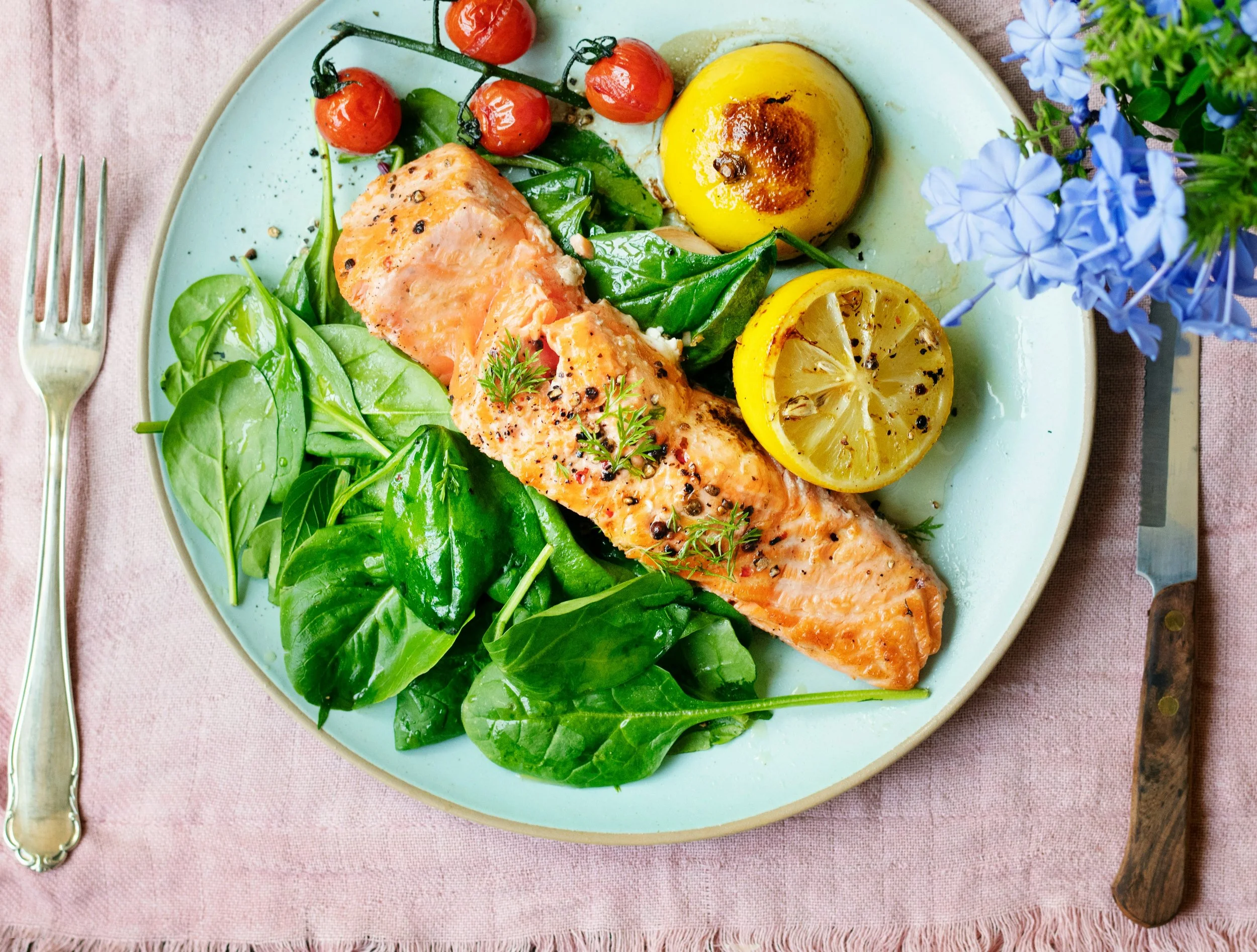
In general, this, as a meal, is not enough.
The First Place to Look: Are You Eating Enough?
You don't have to feel starving for your body to be underfueled. Subtle restriction is enough:
Skipping meals
Picking only “healthy” low calorie foods
Saving calories so you can eat more later
Eating less now because you are afraid you will overeat later
When your body senses a gap, it will let you know — by sending thoughts of food on repeat. That can feel like an obsession, but it's really your body trying to communicate with you.
One Way This Shows Up That People Don’t Recognize
Most people assess whether they're eating enough by looking at what's on their plate. But there's another way underfueling hides — and you’re probably not going to want to hear this —it has to do with weight. If you maintain a weight that is less than the body wants to be (notice I did not say what your mind wants to be) … if you maintain a weight that is less than the body needs, it will ask for more fuel. It will look like food noise.
That may sound strange. Let me explain.
Every body has a weight range it naturally defends — a place it wants to be and tries to return to. The only way to know where that is for you is to:
Eat when hungry and quit when satisfied
Stay reasonably active
Let your weight settle.
If your eating is organized around keeping your weight down, even by a few pounds, your body will keep working to close the gap. And the way it does that is by keeping food on your mind.
This is one of the harder things to hear, because most people in this situation genuinely believe their weight is fine. It fits a category they've been told is healthy. It feels like something they've earned. The idea that their body may need to weigh more, even a little more, to achieve its own personal homeostasis, can feel genuinely disorienting.
But if food thoughts are persistent and you can't find an obvious gap in what you're eating, weight may be the missing piece. Not because something is wrong with your body. But because it's doing exactly what it's designed to do.
In other words, you can't always tell whether you're eating enough by looking at what's on your plate. Persistent food thoughts may be one of the ways your body tells you that you aren't.
While this is hard to hear, it is worth considering. But there is more.
When Food Noise Persists
Once your body starts to feel reliably fed, food thoughts will ease. If other things are driving them too—food rules, psychological restriction, or emotional needs—there may still be more to untangle. Food noise can persist when:
1. You're mentally restricting — even if you're eating enough
Food rules about what you should and should not eat, are everywhere. They're in diet culture, in wellness content, in offhand comments from doctors and friends and strangers on the internet. Most people have absorbed more of them than they realize. And rules about food, even ones you don't follow, keep food on your mind.
I shouldn't eat carbs right now
I already had something sweet
That's too much
Even when you don't follow these rules, the mental back-and-forth keeps food front and center. That back-and-forth is its own kind of food noise — like background music you can't turn off.
Being exposed to food rules is one thing. We all are. But entertaining them, believing in them — that's what keeps the noise running. And once you believe a rule — once a food becomes something you shouldn't have — it's very hard to stop thinking about it.
Tell yourself not to think about a pink pony.
Now what are you thinking about?
Exactly.
If you keep telling yourself you can't have something, it can become very hard to stop thinking about it.
2. Your brain doesn't trust that food is consistently available
If your eating has been inconsistent — dieting, restricting, "being good," starting over on Mondays — your brain has learned something: food is not reliable.
When something important feels uncertain, your brain keeps checking in. That can look like:
Thinking about food even when you're not hungry
Feeling urgency around eating
Wanting to get it while you can
This is not dysfunction. It's your nervous system trying to take care of you. Your brain learned that food wasn't reliable. It's still acting on that. The good news is that brains can learn new things — but only when the evidence changes.
3. You’re not fully satisfied when you eat
You can eat enough and still be left wanting. If your meals are chosen based on rules or what you think you "should" eat, your mind — which, let's face it, notices when it doesn't get what it wants — may keep nudging you. "That's not what I wanted! Why did you pick that?" It can look like:
Poking around the kitchen looking for something, not sure what
Still thinking about the thing you didn't eat
Eating more than you wanted because nothing quite hit
Satisfaction matters. It's part of how your mind knows it can move on.
4. Food has become one of the only places you feel relief
This is where people often land first — "I'm eating for emotional reasons." But it's rarely the whole picture.
Sometimes food brings:
A break
Comfort
Something predictable
A moment of pleasure in a stressful day
The goal isn't to take that away. It's to widen your sources of relief so food doesn't have to carry all of it.
And if you eat when you need to decompress — within the context of intuitive eating, that's just a moment of relaxation combined with something to eat. No harm, no foul.
The Bottom Line
There's a real reason food keeps showing up in your thoughts. It's not a personal failure. It's usually a response to inconsistency, restriction, or needs that aren't being fully met.
As those needs get met more consistently, eating becomes easier. Food moves into the background until you're hungry again. You eat. Your mind moves on to other things.
Not because you forced it. But because your body no longer has to keep asking — and neither does your mind.
Constant Food Thoughts Series
This article is part of the Constant Food Thoughts Series.
Why Do I Constantly Think About Food? — you are here









Does salad really keep you full? Large-volume, low-calorie foods can stretch the stomach temporarily without providing enough fuel—one reason volume eating can backfire.